
This is precisely the objective pursued by Belgian Development Cooperation through its support for the Impact Licensing Initiative (ILI): mobilizing innovation and the private sector to strengthen global public goods, namely goods and services whose benefits extend to everyone, beyond national borders. Health, food security, stability, and the fight against climate change are among them.
Making Innovation Accessible
Around the world, companies, universities, and research centers are developing technologies capable of addressing major global challenges. Yet many of these innovations remain out of reach for populations living in low- and middle-income countries.
The Impact Licensing Initiative helps bridge this gap. Its approach consists of obtaining free licenses from patent holders that grant the right to adapt their technologies so they can be produced locally at an affordable cost and tailored to specific development needs. An impact license makes a patented invention available for use in low- and middle-income countries, provided that such use contributes to the United Nations Sustainable Development Goals (SDGs) specified in the license.
In practical terms, local manufacturers can use these innovations to develop products adapted to their context while creating economic activity and employment. The benefits are threefold: addressing essential needs, strengthening local economies, and ensuring that local development is aligned with and contributes to the SDGs.
Concrete Solutions for Climate, Health, and Food Security
The technologies supported cover a wide range of fields, but they all address fundamental challenges.
Producing Clean Energy Through Green Hydrogen
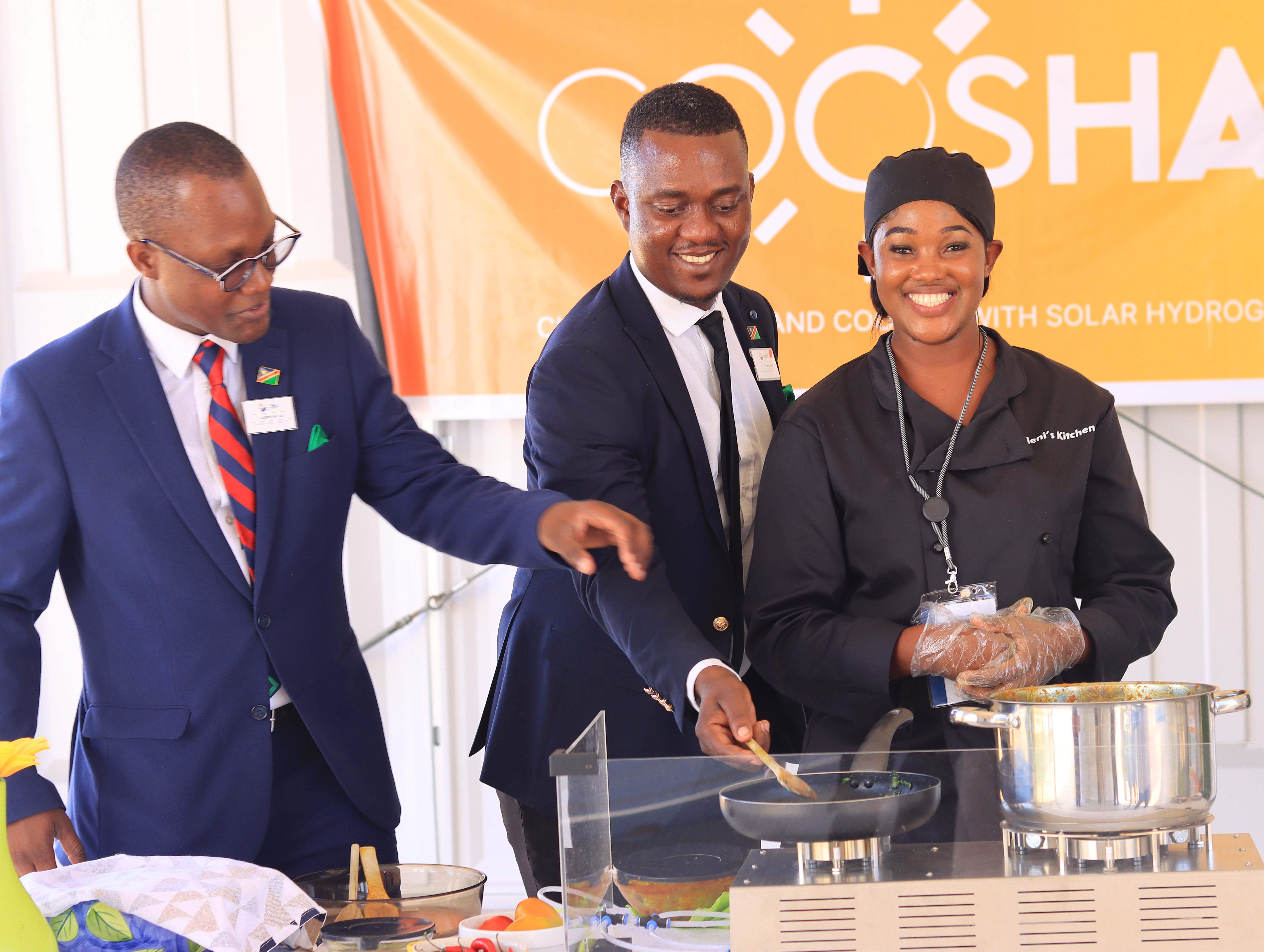
Among the supported innovations is the technology developed by the Belgian company COOSHA, based on the Solhyd invention originating from KU Leuven.
The principle is simple: special panels capture moisture from the air and convert it into green hydrogen. The hydrogen is then stored at low pressure in textile bags and can be used as an energy source to power a refrigerator or a cooking stove.
This technology offers significant opportunities for rural areas with limited access to electricity. It enables locally produced renewable energy without reliance on costly or polluting fossil fuels.
Preserving Vaccines, Medicines, and Food
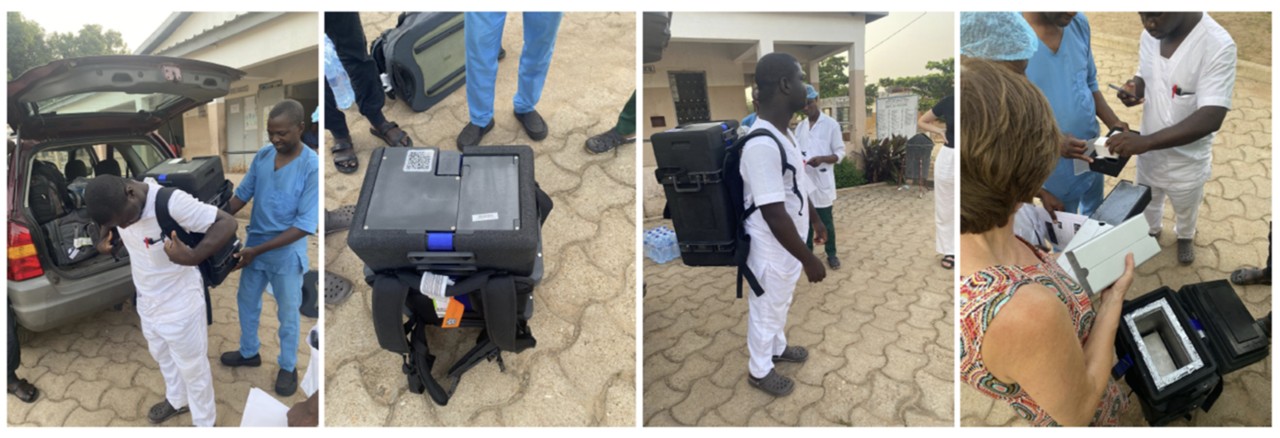
In many parts of the world, maintaining a reliable cold chain remains a major challenge. Without adequate refrigeration, vaccines can lose their effectiveness, medicines can become unusable, and food can spoil rapidly.
Thanks to a thermostatic refrigeration technology developed from innovations by the Colruyt Group and scaled up with the support of Belgian Development Cooperation, IKIC offers a solution capable of preserving cooling for up to three weeks without an external energy supply.
This innovation helps improve access to healthcare while reducing food losses and storage costs. It also represents an important asset for fostering local economic development along strategic transport corridors in Africa and elsewhere that are financed under the European Union's Global Gateway strategy.
Facilitating Access to Medical Treatments
Innovation can also make healthcare more accessible to the most vulnerable populations.
This is the case with READ, a solution that combines medicines with dosage instructions presented in a simple, visual format. Developed with the support of Belgian Development Cooperation, it helps people with limited literacy skills or those without access to complex medical information to follow their treatments correctly.
A seemingly simple innovation, yet one that can have a significant impact on treatment effectiveness and patient health outcomes.

A Winning Partnership for Development
The model promoted by the Impact Licensing Initiative is based on a clear conviction: global challenges require close collaboration between public authorities, the research community, and the private sector.
To ensure the additionality of its adaptations, meaning that they address genuine sustainable development needs that are currently unmet, the Impact Licensing Initiative signed a structural partnership with the UN Technology Bank for Least Developed Countries in 2025. The Initiative's adaptations are now based on the Technology Bank's assessments of technological needs.
To validate the practical and technological relevance of these adaptations, the Impact Licensing Initiative also collaborates with universities and research centers in developing countries to conduct pilot projects. Local companies and research institutions in low- and middle-income countries commit to complying with social and environmental impact criteria aligned with the United Nations Sustainable Development Goals.
This approach offers several advantages. First, it enables wider dissemination of useful innovations. Second, it strengthens the industrial and economic capacities of partner countries. Third, it creates new opportunities for inventors and originating companies, allowing them to develop new markets and applications for their technologies. Finally, private impact investors gain contractual assurance through the impact license that their investments promote the SDGs.
The leverage effect is also significant: every euro invested by public development cooperation can attract additional private financing. In 2025, the Impact Licensing Studio, launched by the ILI, benefited from €1.6 million in private capital dedicated to the development and dissemination of new impact-driven innovations, almost twice the amount financed by Belgian International Cooperation.
In addition, Finexpo has provided financial support to COOSHA and IKIC amounting to €876,000, further strengthening the coherence and complementarity of Belgian instruments serving sustainable development objectives.
Investing in Global Public Goods
Beyond the technologies themselves, this approach illustrates how Belgian Development Cooperation invests in solutions that generate benefits far beyond national borders.
Greater access to clean energy, more effective healthcare systems, improved food preservation, and easier access to medical treatments all contribute to strengthening societies' resilience in the face of crises. These advances benefit partner countries directly, while also contributing to stability, security, and sustainable development on a global scale.
By supporting initiatives such as the Impact Licensing Initiative, Belgium demonstrates that innovation and private sector engagement can become powerful drivers of development, serving global public goods from which everyone benefits.